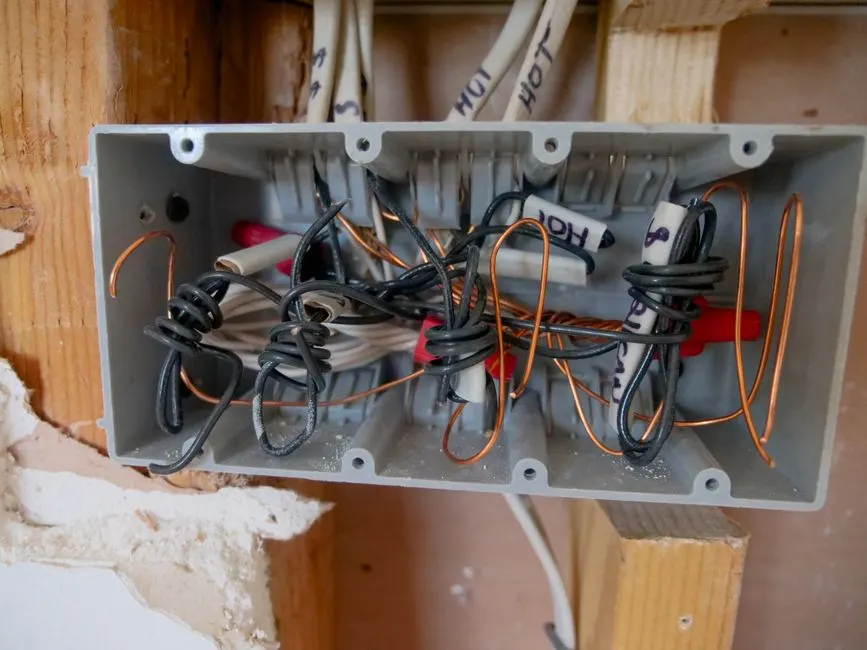
You prevent electrical fires in older San Fernando Valley homes by upgrading outdated wiring and panels, replacing worn outlets, and never overloading circuits that were sized for 1950s appliances. The risk is real: homes built before 1980 account for a disproportionate share of electrical fires nationwide, and many SYLMAR houses date to the 1940s-1960s. This guide covers the specific failure points we see in San Fernando Valley homes and the prevention steps that actually reduce your risk.
Why older San Fernando Valley homes are at higher risk
Older San Fernando Valley homes are at higher risk because their electrical systems were designed for far less demand than modern life places on them. A 1950s home in SYLMAR might have had one 60-amp panel serving a refrigerator, a few lamps, and a radio. Today that same panel runs central air, a 240-volt EV charger, a microwave, and a home office.
The insulation on old wiring also degrades. Cloth and rubber insulation dries out, cracks, and exposes bare conductors inside walls. Add a century of heat cycling in a San Fernando Valley attic that regularly hits 140°F in summer, and you have a recipe for arcing.
We see this constantly when we respond to Fire Damage Restoration in Sylmar calls. The fire almost always starts at a connection point, not mid-wire: a backstabbed outlet, a wire nut that loosened over decades, or a junction box buried behind drywall.
What causes electrical fires in older San Fernando Valley houses?
Electrical fires in older San Fernando Valley houses are most often caused by overloaded circuits, loose connections, and aging insulation, not by a single dramatic failure. The U.S. Fire Administration attributes roughly 24,000 home electrical fires per year to these cumulative problems.
Here is what we find most often in pre-1970 SYLMAR and Pacoima homes:
- Aluminum branch wiring installed between roughly 1965 and 1973. Aluminum expands and contracts more than copper, loosening at terminals and creating arc points.
- Backstabbed outlets where the wire is pushed into a spring clip instead of screwed to the terminal. These loosen over time and overheat.
- Fuse boxes rated at 60 amps that have been "upgraded" with oversized fuses, defeating the safety device entirely.
- Extension cords used as permanent wiring running under carpets or through doorways to feed a space heater or window AC.
Each of these is a slow-burn problem. The fire starts when a connection heats up, charring the insulation and nearby framing over months or years.
Signs of electrical fire risk in San Fernando Valley CA homes
Signs of electrical fire risk in San Fernando Valley CA homes include warm or discolored outlet covers, a burning smell near switches, flickering lights when appliances cycle, and breakers that trip repeatedly. Any one of these warrants an electrician's inspection within the week.
Specific warning signs to watch for:
- Outlet or switch plates that feel warm to the touch or show brown scorch marks.
- A faint fishy or burning smell in a room with no cooking or fireplace.
- Lights that dim when the refrigerator or HVAC kicks on.
- Buzzing or sizzling sounds from a receptacle or panel.
- GFCI or AFCI breakers that trip more than once a month.
If you notice any of these, stop using that circuit and call a licensed electrician. We handle the cleanup side after a fire, but prevention is always cheaper than restoration.
Electrical fire prevention checklist San Fernando Valley CA
An electrical fire prevention checklist for San Fernando Valley CA homes should include a professional inspection every 10 years, an AFCI breaker upgrade, and a room-by-room walkthrough for overloaded outlets. Here is the checklist we recommend to homeowners:
- Get a full electrical inspection every 10 years or whenever you buy a home older than 40 years. A licensed electrician should pull the panel cover, check torque on main lugs, and test outlets for proper grounding.
- Install AFCI breakers on bedroom and living-area circuits. Arc-fault circuit interrupters detect the signature of a series arc and trip before ignition. They cost $40-$80 per breaker plus labor in 2026.
- Replace all backstabbed outlets with screw-terminal or commercial-grade receptacles. A 1950s home might have 40 outlets; budgeting $15-$25 per outlet in labor and materials is realistic.
- Remove extension cords from permanent use. If you need more outlets, add a circuit.
- Keep the panel clear of storage and never tape a breaker in the "on" position.
- Test smoke and CO alarms monthly and replace the units every 10 years.
For a deeper dive into the inspection side, our team often refers homeowners to a licensed electrician, but we also handle the aftermath when prevention fails. If you ever need Electrical Fire Cleanup in SYLMAR, California, we are a phone call away.
Should you upgrade your electrical panel in San Fernando Valley California?
You should upgrade your electrical panel in San Fernando Valley California if it is a 60-amp or 100-amp fuse box, a Zinsco or Federal Pacific panel, or if you are adding an EV charger, central AC, or a ADU. Modern homes need 200 amps to support today's loads safely.
Panel upgrade costs in 2026 run $2,500-$6,000 depending on whether the service drop and meter need replacement. That is real money, but it is far less than rebuilding after a fire. A Zinsco panel, common in 1970s San Fernando Valley tract homes, has a documented failure rate at the bus bar that makes insurance companies nervous.
If your panel is a Federal Pacific Stab-Lok, replace it. Those breakers have a known tendency to fail to trip under overload. We have seen the results in Fire Damage Restoration in San Fernando Valley jobs where the breaker never tripped and the fire ran up the wall cavity.
Old knob and tube wiring fire prevention San Fernando Valley California
Old knob and tube wiring fire prevention in San Fernando Valley California starts with recognizing that this wiring has no ground conductor and brittle insulation. Knob and tube was common in homes built before 1950, and many SYLMAR properties still have it in the attic or behind plaster walls.
The biggest danger is not the wire itself but what homeowners do to it. Insulation contractors blow cellulose over live knob-and-tube runs, trapping heat. Electricians splice new Romex into old knob-and-tube without a proper junction box. Both create fire risk.
If you have knob and tube, do not cover it with insulation, and do not add loads to those circuits. A full rewire of a 1,200-square-foot home runs $8,000-$15,000 in 2026. Partial rewiring of the highest-risk circuits is a reasonable middle path.
We also recommend an AFCI breaker on any circuit that still has knob and tube, because the AFCI will detect the arcing that old insulation allows.
Common mistakes that increase electrical fire risk
The most common mistake we see is homeowners treating a tripping breaker as an inconvenience rather than a warning. A breaker that trips repeatedly is telling you the circuit is overloaded or there is a fault. Replacing it with a larger breaker or taping it on defeats the only safety device on that circuit.
Other mistakes:
- Using a space heater on an extension cord. Space heaters draw 1,500 watts; most extension cords are rated for 1,200. The cord overheats and ignites carpet.
- Daisy-chaining power strips. Plugging one strip into another multiplies the load on a single outlet.
- Ignoring aluminum wiring. If your home was built 1965-1973, have an electrician check for aluminum branch wiring and install proper pigtails.
- DIY electrical work without a permit. Unpermitted work is a common finding in older San Fernando Valley homes and often the origin of a fire.
If a fire does happen, our team provides Smoke Damage Restoration in SYLMAR, California and full structural repair. But the goal is to never need us.
When to call a professional
Call a licensed electrician if you see any warning sign from the list above, if your home is over 40 years old and has never had an electrical inspection, or if you are planning a major appliance upgrade. Electrical work is not a DIY category; the stakes are too high.
If a fire has already occurred, call us. Fire Damage Restoration Sylmar handles the entire restoration process, from emergency board-up to final walkthrough. We work directly with your insurance adjuster and document everything.
Frequently Asked Questions
How do I prevent electrical fires in an older San Fernando Valley home?
Start with a professional electrical inspection every 10 years, upgrade to AFCI breakers, replace backstabbed outlets, and never overload circuits. If your panel is a 60-amp fuse box or a recalled brand like Zinsco or Federal Pacific, plan a 200-amp upgrade.
What causes electrical fires in older San Fernando Valley houses?
Loose connections, aging insulation, aluminum wiring, and overloaded circuits cause most electrical fires in older San Fernando Valley houses. These problems develop slowly and often start at outlets, switches, or the panel rather than mid-wire.
Should I upgrade my electrical panel in San Fernando Valley California?
Yes, if you have a 60-amp or 100-amp panel, a Zinsco or Federal Pacific panel, or you are adding an EV charger or central AC. A 200-amp upgrade costs $2,500-$6,000 in 2026 and is the single most effective fire-prevention upgrade for an older home.
How often should electrical wiring be inspected in San Fernando Valley CA?
Every 10 years for homes over 40 years old, and every 5 years if you have aluminum wiring or knob-and-tube. An inspection includes panel torque checks, outlet testing, and a visual review of accessible wiring.
Who do I call for electrical fire prevention in San Fernando Valley?
Call a licensed electrician for prevention and inspection. If a fire has already happened, call Fire Damage Restoration Sylmar at (833) 929-6186 for emergency restoration and cleanup.
Get help with Fire Damage Restoration in SYLMAR
If you are dealing with the aftermath of an electrical fire, we are ready to help. Fire Damage Restoration Sylmar provides emergency response, smoke and soot cleanup, and full structural repair across SYLMAR and the San Fernando Valley.
Call us at (833) 929-6186 for a fast response and a clear plan.